Exercise guide · Chest
Cable Chest Press
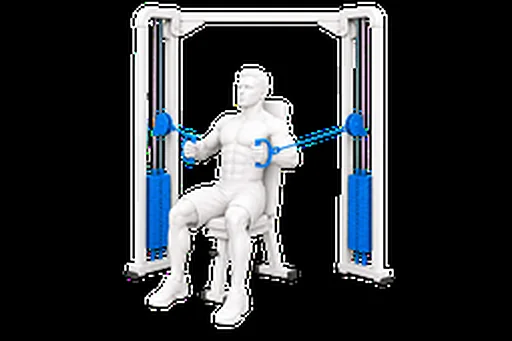
The Chest Press (Cable) is a compound horizontal press performed seated upright between two cable columns. Unlike a cable fly, the elbows bend on the return and extend as the handles press forward from the chest, so the triceps assist the chest and front delts.
- Targets: Chest
- Equipment: Cable
- Type: Compound
Step by step
How to do the Cable Chest Press
- Place an adjustable bench centrally between two cable columns with its backrest upright. Set both pulleys around seated mid-chest height, attach single handles, and confirm the bench is stable and the cables clear its frame.
- Take one handle in each hand and sit with your back supported, feet planted, and torso upright. Bring the handles beside your mid-chest without letting the cables pull your shoulders backward.
- Start with elbows bent and angled about 30–60 degrees from your torso. Keep your wrists stacked with your forearms and set your shoulders down and back against the pad.
- Press both handles forward and slightly inward from the chest by extending your elbows. Keep the handles separated and do not forcefully lock out.
- Return under control by bending your elbows until the handles are beside the chest or you reach a comfortable shoulder range, then repeat.
- After the set, keep hold of both handles as you stand or turn to return them to the pulleys under control.
Form cues
- Sit tall with the bench centered
- Wrists stay stacked with forearms
- Bend and straighten the elbows—this is a press, not a fly
- Press forward from mid-chest with shoulders supported
Common mistakes
- Keeping nearly straight elbows and turning the movement into a cable fly
- Placing the bench off-center so one cable pulls at a different angle
- Flaring the elbows straight out or letting the shoulders roll forward
- Lowering the handles rapidly or pulling them far below a comfortable chest position
Muscles worked
Primary
Chest
Secondary
Triceps and Front delts
Safety: Set up with a light load first and make sure the bench cannot slide. Keep control of both handles while getting into and out of position; use assistance if the station makes the setup awkward. Stop if the movement causes sharp shoulder pain.
Alternatives