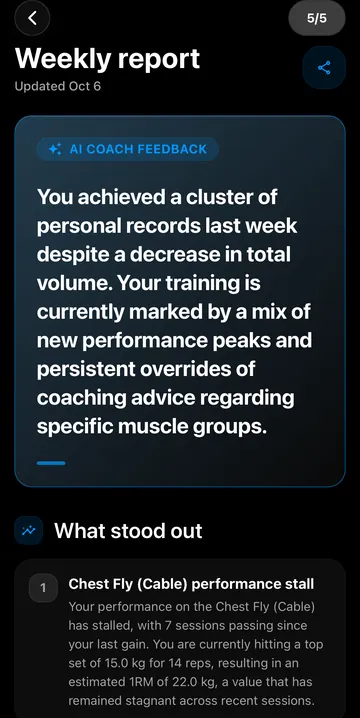
The Future of Strength Training: AI Strength Coaches Explained
What an AI strength coach can and can't do: how adaptive apps adjust load from your logs, what studies show, and where AI coaching is heading.
Read guideStrength training blog
Program, track, recover, and progress with better evidence.
Practical guides for lifters who care about the logbook: workout splits, training volume, intensity, progression, recovery, calories, macros, and protein.
Research library
Each research guide cites the meta-analyses and controlled trials behind its advice, grades how strong the evidence is, and ends with what to do in your next session. Start with the overview, or jump straight to a variable.
What an AI strength coach can and can't do: how adaptive apps adjust load from your logs, what studies show, and where AI coaching is heading.
Read guide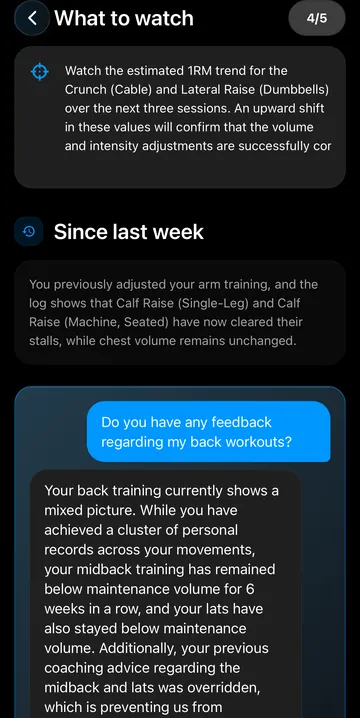
Is an AI personal trainer worth it? We compare AI and human coaching on strength gains, adherence, form and cost, using randomized trials.
Read guide
Experts have rated ChatGPT and Gemini workout plans in peer-reviewed studies. Where AI plans fall short, how to prompt better, what to check.
Read guide
How muscle grows and what matters most, ranked by evidence: effort, volume, overload, protein, sleep and more, plus myths and a starter template.
Read guide
What dose-response meta-analyses show about weekly sets per muscle, where returns diminish, how to count indirect sets, and a volume table by training age.
Read guide
Meta-analyses and trials in trained lifters on failure vs 1–3 reps in reserve, the recovery cost of failure, and which exercises to push.
Read guide
Heavy vs light loads for hypertrophy: what meta-analyses show, how light is too light, why strength needs heavy weights, and reps by exercise.
Read guide
What frequency meta-analyses and protein synthesis data show, why weekly volume matters more, and how to choose 1x, 2x or 3x per week for your split.
Read guide
Do lengthened partials and long-muscle-length training build more muscle? What the studies show, where they disagree, and which exercises to choose.
Read guideHow fast can you build muscle naturally? Research on rates of muscle gain by training age, sex, age and genetics, plus a realistic monthly expectation table.
Read guide
Body recomposition is real. What the studies show on deficit size, protein, training and sleep, who recomps best, and how to measure it honestly.
Read guide
Creatine adds a small but real boost to muscle and strength gains from lifting. The meta-analyses, dosing, water weight, safety, and who benefits most.
Read guide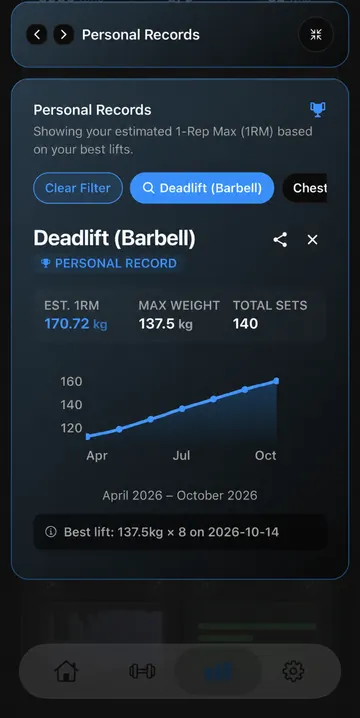
How fast you lose muscle and strength when you stop lifting, what muscle memory is, the minimum training that maintains gains, and how to return after a break.
Read guide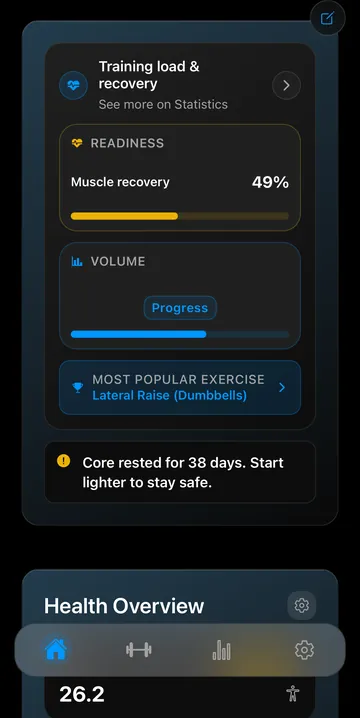
How sleep loss affects muscle protein synthesis, strength and fat loss, how much sleep lifters need, whether pre-sleep protein helps, plus a recovery checklist.
Read guide
What concurrent-training meta-analyses show about cardio and muscle growth, running vs cycling, lift-first vs cardio-first, and how many hours to separate them.
Read guideCompare 5-day and 6-day push pull legs schedules by training frequency, recovery, missed workouts, weekly volume, and who each PPL split suits.
Read guideUnderstand average training intensity, percentage of 1RM, RPE and RIR—and learn how to interpret an intensity dashboard without false precision.
Read guideChoose a complete full-body workout plan for beginners or intermediates, with exact exercises, sets, reps, schedules, and progression rules.
Read guideCompare complete intermediate and advanced push pull legs programs, including exercises, sets, reps, schedules, progression, recovery, and FAQs.
Read guideUse a complete upper/lower split for beginners or intermediates, with exact workouts, sets, reps, 4–5 day scheduling, and progression.
Read guideCompare weight training apps that analyze weekly tonnage, training intensity, strength trends, muscle workload, fatigue, and recovery.
Read guide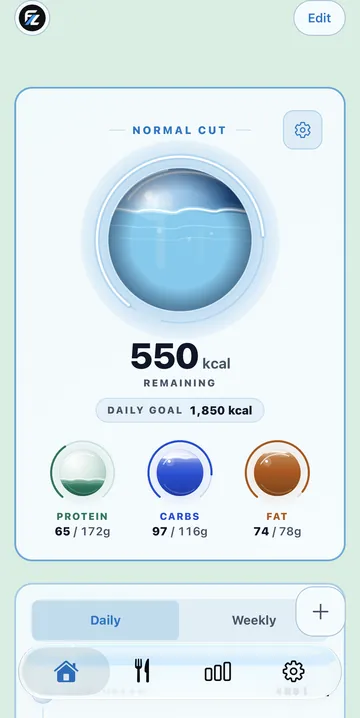
Compare calorie, macro, and protein tracking and choose the least detailed method that still answers your weight, muscle, and performance questions.
Read guideAvoid cutting mistakes that raise muscle-loss risk: an excessive deficit, inadequate protein, poor training, excess fatigue, and low energy availability.
Read guideUse this step-by-step cutting plateau audit to separate scale noise, tracking drift, lower activity, and a true need to adjust calories.
Read guidePure creatine has no meaningful protein, carbohydrate, or fat calories, but it may change scale weight. Learn why that change is not fat gain.
Read guideCompare full body, upper lower, PPL, and PPLUL workout splits by weekly availability, frequency, session length, recovery, and experience level.
Read guideLearn how to schedule a full-body workout one, two, or three days per week using a simple A/B rotation without compromising recovery.
Read guideLearn how long to rest between sets for strength, muscle growth, isolation exercises, supersets, and time-limited workouts.
Read guideCalibrate RPE and reps in reserve with a practical three-session process, repeatable exercise standards, accuracy checks, and safer effort targets.
Read guide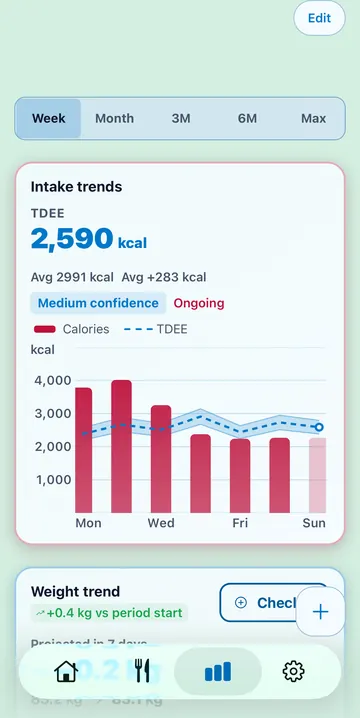
Estimate maintenance calories with a 14–28-day intake and bodyweight test, then use gym performance as context rather than proof of energy balance.
Read guide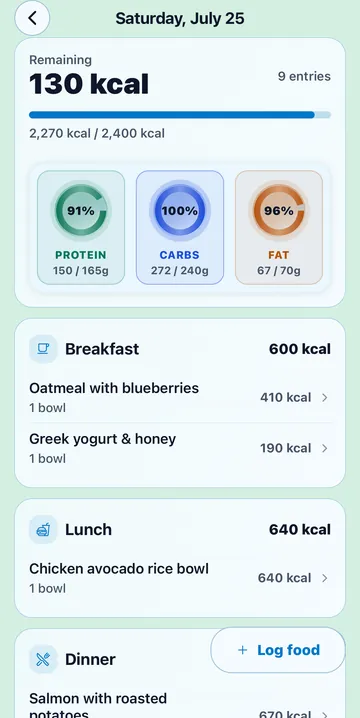
Manage hunger on a cut by checking the deficit, building filling meals, adjusting timing, improving food defaults, and recognizing when to stop dieting.
Read guideLearn what an estimated 1RM trend can—and cannot—tell you about strength progress, with practical examples and a comparison checklist.
Read guideLearn what a deload week is, when to consider one, how to adjust sets, load, and effort, and how to return to normal training.
Read guideUse a minimum-effective food-tracking method, flexible ranges, repeat meals, and clear stop rules without turning every meal into a test.
Read guideIs PPLUL a good split for you? Compare its benefits, drawbacks, schedule demands, recovery needs, and fit for strength and hypertrophy goals.
Read guideSet a conservative lean-bulk calorie surplus from weight and training trends without assuming one intake or rate of gain is optimal for everyone.
Read guideSet protein, fat, and carbohydrate in grams for strength training, then adjust the split to your calorie target, workload, preferences, and response.
Read guideUse a maintenance phase to stabilize bodyweight, improve training and habits, or pause a cut—without claiming it repairs or resets metabolism.
Read guideCompare two practical PPLUL programs: an intermediate strength variation and an advanced hypertrophy variation with progression and fatigue rules.
Read guide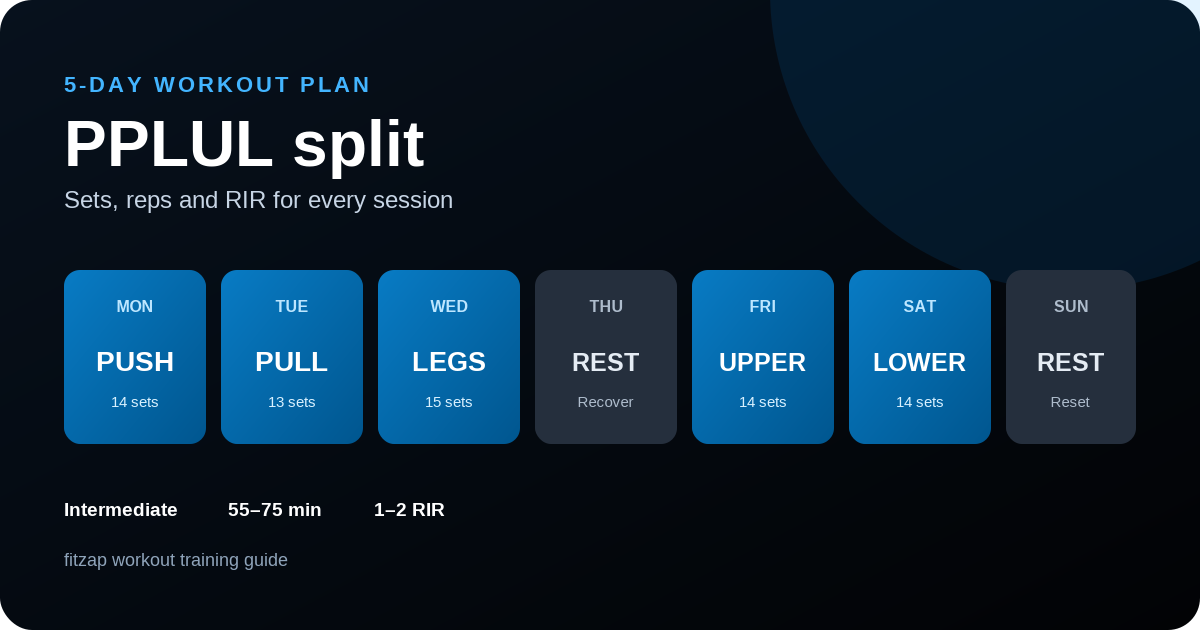
Follow a complete 5-day PPLUL split with every exercise, set, rep and RIR target, plus two schedules and progression rules for intermediate lifters.
Read guideSet an evidence-based daily protein target for muscle growth, with bodyweight examples, meal guidance, food options, and cutting adjustments.
Read guideLearn when to eat protein after lifting, how much to have, and how fed versus fasted training changes the practical post-workout recommendation.
Read guideCompare reverse dieting with an immediate return to estimated maintenance after a cut, including new trial evidence, scale changes, and adjustments.
Read guideUse this practical 15-minute food-tracking workflow to pre-log meals, record high-impact foods, correct portions, and review useful trends.
Read guideCompare PPLUL and ULPPL workout orders, including muscle frequency, fatigue, rest-day placement, missed sessions, and which five-day split may fit you.
Read guideCompare a 4-day vs 5-day upper/lower split, schedule the UA/LA/UB/LB rotation, and add a fifth day without compromising recovery.
Read guideUse bodyweight, waist, training performance, recovery, and adherence trends to decide whether to cut, lean bulk, or maintain next.
Read guideUse anchor lifts, RIR, volume, bodyweight, and recovery trends to monitor a cut without mistaking every poor workout for muscle loss.
Read guideLearn what weekly tonnage measures, how it differs from hard sets and muscle volume, and when each metric helps your training decisions.
Read guideLearn how workout apps estimate fatigue and recovery, which inputs matter, what the scores cannot measure, and how to use them safely.
Read guide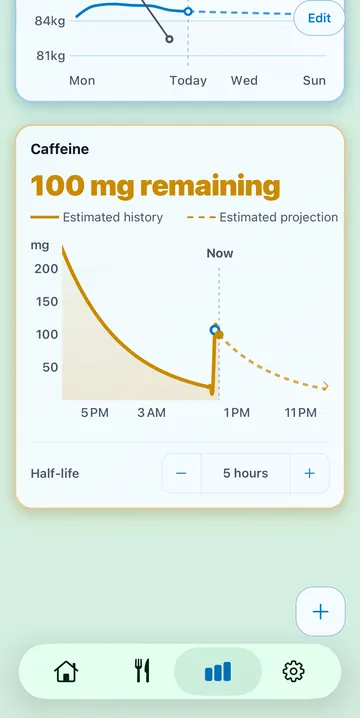
Choose a comfortable pre-lifting meal from your timing, last meal, session volume, and preferences—without assuming everyone needs extra carbohydrates.
Read guideUnderstand why the fast first-week scale drop slows as glycogen, water, gut content, activity, and fat loss settle—and when to adjust the diet.
Read guideEvaluate workout apps for advanced lifting using eight checks for workload, intensity, strength, fatigue, recovery, progression, and data quality.
Read guideEating for lifting, explained: calories, protein, carbs, fat, hydration, creatine, and how your needs change when you cut, gain, or maintain.
Read guideLearn how training can progress through load, repetitions, technique, range of motion, effort, and better execution—not only heavier weights.
Read guideReduce the risk of strength loss while cutting with a moderate deficit, sufficient protein, specific lift practice, and evidence-led fatigue adjustments.
Read guideAbout these guides
You do not need an app to use any of these guides. If you want somewhere to log what they describe, fitzap workout records sets, reps, load and RPE, and fitzap nutrition logs food against calorie and protein targets. Both are free to download on iOS and Android; each works on its own, and some features are part of optional Pro.