Before lifting, eat a familiar meal that leaves you comfortable and supports the session. If you train two to four hours after a normal meal, you may not need anything special. If you train after a long fast, have a long or high-volume workout, or begin with low glycogen, carbohydrate and some protein become more useful.
The meal does not need a supplement label. Timing, total daily intake, session demand, and gastrointestinal tolerance matter more than whether the food is marketed as “pre-workout.”
What the research says
- Fed lifters doing normal volumes rarely need extra carbs. Across 49 studies, more carbohydrate generally did not improve performance in fed sessions of up to about 10 sets per muscle group.1 Moderate evidence
- Carbs help longer and fasted sessions. Carbohydrate increased total training volume overall (standardized effect 0.61), with larger benefits in sessions over 45 minutes and after fasting 8 hours or more.2 Moderate evidence
- Pre-workout protein counts. Protein eaten before training works as well as protein after it for strength and muscle gain.3,4 Moderate evidence
- Caffeine is a reliable but optional boost. 3–6 mg/kg about 60 minutes before training improves performance in many studies, including a small gain in maximal strength.5,6 Strong evidence
Evidence grades reflect the number and quality of studies (meta-analyses > single RCTs > acute/mechanistic data).
Do you need to eat before lifting?
Use four questions:
- When did you last eat a substantial meal?
- How long and demanding is the upcoming session?
- Are you also dieting, doing endurance work, or training twice that day?
- Which foods can you digest comfortably before hard sets?
A 45-minute upper-body session two hours after lunch has a different fueling problem from a 90-minute legs workout first thing in the morning. The former may need no extra food. The latter may benefit from an easy carbohydrate source.
Evidence is appropriately conditional. A systematic review of 49 studies, most in strength-trained people, found that higher carbohydrate intake did not improve acute performance in 13 of 19 trials. The six positive trials mostly compared against fasted controls or used workouts with more than 10 sets per muscle group, and there was no sign that bigger doses worked better.1 For context on how many sets per muscle most lifters actually need, see how many sets per week to build muscle.
Key study
Acute carbohydrate and lifting performance (King et al., 2022)
- Design
- Systematic review and meta-analysis of crossover trials
- Who
- 21 studies, 226 healthy participants
- Compared
- Carbohydrate ingestion versus placebo or water before or during resistance exercise
- Result
- Carbohydrate increased total session volume (SMD 0.61). The effect was larger in sessions over 45 minutes (SMD 1.02) and after fasts of 8 hours or more (SMD 0.39), and grew with the number of maximal-effort sets. Carbohydrate dose did not moderate the effect
Why it matters: It tells you when pre-lift carbs are worth it: long, hard, high-set sessions, especially after an overnight fast. The caveat: these are acute performance tests, not long-term muscle growth, and the studies varied in design.2
Pre-lift carbohydrate is a tool, not a requirement for every workout.
Two to four hours before lifting
Eat a normal mixed meal with:
- a meaningful protein serving;
- a carbohydrate source if it fits the session and daily plan;
- a moderate amount of fat; and
- a portion size you know you can digest.
Examples include:
- chicken, rice, and vegetables;
- tofu with noodles and vegetables;
- Greek yogurt, oats, fruit, and nuts;
- eggs, potatoes, and fruit;
- a turkey or hummus sandwich with yogurt; or
- beans, rice, salsa, and a lean protein source.
This wider window allows more fiber and fat than a snack eaten immediately before training. Still, an enormous, high-fat meal may feel heavy during squats or deadlifts. Individual response wins over generic rules.
Protein in this meal contributes to the daily target and provides amino acids across the training period. In a 10-week trial in 21 trained men, 25 g of protein taken immediately before training produced the same strength and muscle gains as the same dose immediately after.3 The size and timing of the pre-workout meal also influence how urgently you need protein afterward,4,7 so you do not need to force another shake at the gym door if you recently ate sufficient protein. For the other side of the session, see protein timing after workouts.
Sixty to ninety minutes before lifting
Choose a smaller meal with easier-to-digest carbohydrate and protein. Keep fat and fiber lower if they commonly cause fullness, reflux, or cramping.
Options include:
- cereal and milk;
- yogurt with a banana and honey;
- toast with jam plus a protein shake;
- a small rice bowl with lean protein;
- a smoothie with fruit, milk, and yogurt; or
- rice cakes with cottage cheese and fruit.
There is no exact carbohydrate dose required for ordinary resistance training; neither the systematic review nor the meta-analysis found a clear dose-response effect.1,2 Start with a normal snack portion. A larger athlete facing a long lower-body session may want more than a smaller athlete doing low-volume bench work.
Fifteen to forty-five minutes before lifting
At this point, convenience and stomach comfort dominate. If food is needed, use something small and familiar:
- a banana;
- toast or rice cakes with jam;
- a small sports drink;
- applesauce;
- a few dates; or
- a small whey or soy shake if the previous protein meal was distant.
Liquid carbohydrate is useful when appetite is low or solid food sits badly. It is not inherently superior to food. Avoid trying a concentrated drink for the first time before a hard session.
Match carbohydrate to the session
Carbohydrate is most worth testing when:
- the session contains many challenging sets for the same muscles;
- the workout lasts longer than about 45 minutes and performance normally falls late in it;
- you train early after an overnight fast;
- a previous session or sport practice may have reduced glycogen;
- you train twice in one day; or
- you are cutting and the hardest sessions feel under-fueled.
It may matter less when:
- you ate a mixed meal in the previous few hours;
- the workout is short or low-volume;
- long rests separate a small number of strength sets; or
- your existing daily carbohydrate intake already supports performance.
The ISSN nutrient-timing position stand notes that high-volume exercise depletes glycogen the most, and that carbohydrate during resistance exercise can support glycogen stores.7 The broader macro guide for strength training explains why daily carbohydrate should be matched to workload rather than assigned by one universal ratio.
What about training fasted?
Some lifters feel fine training before breakfast. If the session is short, familiar, and performance remains stable, there is no obligation to eat. Hydration and caffeine, if normally used and medically appropriate, may be enough. That said, the meta-analysis above found that carbohydrate helped most after fasts of 8 hours or more, which describes most early-morning sessions.2
Change the setup when fasted training repeatedly produces fewer reps, higher RPE, dizziness, or poor concentration. A small carbohydrate snack is an easy experiment. If dizziness, faintness, shakiness, or other unusual symptoms persist, stop training and seek appropriate medical advice rather than treating the problem as a nutrition challenge.
People using glucose-lowering medication need individualized guidance for exercise and meal timing because hypoglycemia risk cannot be managed with a generic snack list.
Hydration and stimulants
Arrive normally hydrated. Pale-yellow urine and normal thirst are more useful than forcing liters immediately before training. Heavy sweating, heat, or long sessions can increase fluid and sodium needs.
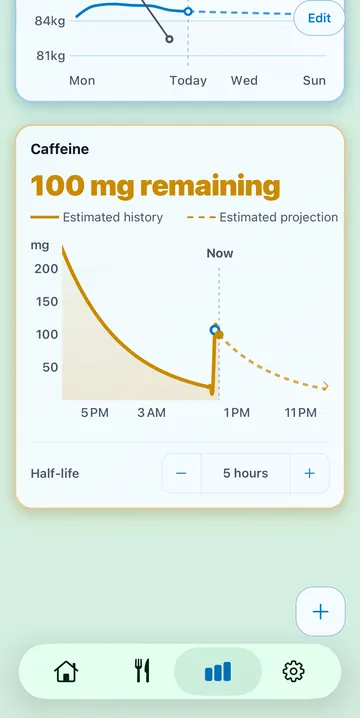
Caffeine can improve performance, but it is optional. The ISSN position stand reports consistent benefits at 3–6 mg/kg of bodyweight, most commonly taken about 60 minutes before exercise; the minimal effective dose may be as low as 2 mg/kg, and very high doses around 9 mg/kg bring frequent side effects without clear extra benefit.5 For lifting specifically, a meta-analysis found a small improvement in one-rep-max strength (SMD 0.20), significant for the upper body but not the lower body.6
| Bodyweight | Low dose (2 mg/kg) | Typical range (3–6 mg/kg) |
|---|---|---|
| 60 kg / 132 lb | 120 mg | 180–360 mg |
| 75 kg / 165 lb | 150 mg | 225–450 mg |
| 90 kg / 198 lb | 180 mg | 270–540 mg |
Start at the low end; the research ranges are not a recommendation to take the maximum. Sleep disruption and anxiety vary between people, and pregnancy, cardiovascular conditions, medications, and individual sensitivity change the risk. Late dosing can harm sleep. A pre-workout meal guide should not become an excuse to rely on escalating stimulant doses. If you want a supplement with long-term evidence for muscle gain rather than an acute boost, read does creatine build muscle.
Run a simple meal experiment
Pick one repeatable session and compare two or three exposures:
- Keep the workout, exercise order, and rest intervals similar.
- Use the same pre-lift meal and timing.
- Record load, repetitions, and RPE or RIR.
- Note hunger, energy, reflux, cramping, and late-session performance.
- Change only the portion, timing, or carbohydrate amount next time.
One great workout does not prove a meal is magical. Look for a repeatable benefit without gastrointestinal cost. Logging the meal next to the session, in an app or a notebook, makes the comparison easier to repeat. Remember that the session itself does the muscle-building work; the science of muscle growth explains which training variables matter most.
The practical takeaway
If you ate recently and the session is short, a special pre-workout meal may add nothing. If the session is fasted, longer than about 45 minutes, high-volume, or follows glycogen-depleting work, easy carbohydrate and some protein can be useful. Choose familiar foods, scale the portion to the time available, and let repeatable training performance decide.
Health note: This article is general information for healthy adults, not medical or dietetic advice. If you are pregnant, under 18, managing a medical condition such as kidney disease or diabetes, or have a history of disordered eating, check with a doctor or registered dietitian before changing how you eat.
References
- Henselmans M, Bjørnsen T, Hedderman R, Vårvik FT. The effect of carbohydrate intake on strength and resistance training performance: a systematic review. Nutrients. 2022;14(4):856. PubMed
- King A, Helms E, Zinn C, Jukic I. The ergogenic effects of acute carbohydrate feeding on resistance exercise performance: a systematic review and meta-analysis. Sports Med. 2022;52(11):2691-2712. PubMed
- Schoenfeld BJ, Aragon A, Wilborn C, Urbina SL, Hayward SE, Krieger J. Pre- versus post-exercise protein intake has similar effects on muscular adaptations. PeerJ. 2017;5:e2825. PubMed
- Aragon AA, Schoenfeld BJ. Nutrient timing revisited: is there a post-exercise anabolic window? J Int Soc Sports Nutr. 2013;10(1):5. PubMed
- Guest NS, VanDusseldorp TA, Nelson MT, et al. International Society of Sports Nutrition position stand: caffeine and exercise performance. J Int Soc Sports Nutr. 2021;18(1):1. PubMed
- Grgic J, Trexler ET, Lazinica B, Pedisic Z. Effects of caffeine intake on muscle strength and power: a systematic review and meta-analysis. J Int Soc Sports Nutr. 2018;15:11. PubMed
- Kerksick CM, Arent S, Schoenfeld BJ, et al. International Society of Sports Nutrition position stand: nutrient timing. J Int Soc Sports Nutr. 2017;14:33. PubMed