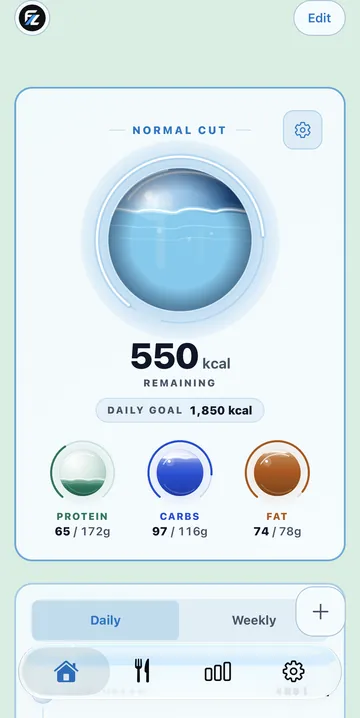
Lifters need four things from their diet, in this order: enough energy for the phase you are in, about 1.6–2.2 g/kg of protein a day, carbohydrate placed around hard training, and sensible fat and fluid intake. Creatine is the one supplement with strong evidence behind it. Almost everything else is a refinement.
This page is the hub for every nutrition guide on the site. Each section gives the evidence-based number, says how strong the evidence is, and links to the deep dive if you want the detail. If you want the training side of the picture, start with The Science of Muscle Growth: An Evidence-Based Guide.
What the research says
- About 1.6 g/kg of protein captures most of the benefit. Across 49 trials and 1,863 people, extra protein stopped adding fat-free mass at a total intake of about 1.62 g/kg/day.1 Strong evidence
- Protein needs rise in a deficit. The ISSN calls 1.4–2.0 g/kg/day sufficient for most exercising people, but suggests 2.3–3.1 g/kg/day may be needed to keep lean mass when resistance-trained people diet.2 Moderate evidence
- Carbohydrate is conditional for lifting. In a systematic review of 49 studies, extra carbohydrate rarely improved performance in fed sessions of up to about 10 sets per muscle group; benefits showed up mainly versus fasted controls or at higher volumes.3 Moderate evidence
- A bigger surplus mostly adds fat. In trained lifters over eight weeks, faster bodyweight gain strongly predicted skinfold gain but did little for muscle thickness or squat strength.4 Emerging evidence
- Creatine monohydrate works and is safe for healthy adults. The ISSN position stand describes it as the most effective ergogenic supplement for high-intensity capacity and lean mass during training.5 Strong evidence
Evidence grades reflect the number and quality of studies (meta-analyses > single RCTs > acute/mechanistic data).
How many calories does a lifter need?
Total energy intake decides the direction of bodyweight over time and sets the resources available for recovery. The ISSN position stand on diets and body composition puts it plainly: fat loss is driven by a sustained calorie deficit, and gaining lean mass is supported by a sustained surplus. A wide range of diet styles, from low-fat to low-carbohydrate, can work once those basics are in place.6
Nobody knows their exact energy expenditure, so treat any number as a starting point. Use the maintenance calories calculator for a first estimate, eat close to it consistently for two to four weeks, and compare weekly-average bodyweight. If the average is stable, you have found a working maintenance range. If it is drifting, adjust in modest steps rather than reacting to one weigh-in.
Under-eating is a common reason lifters stall. The 2023 IOC consensus statement describes Relative Energy Deficiency in Sport (REDs) as a syndrome of health and performance problems in female and male athletes exposed to low energy availability, and notes a growing role for low carbohydrate availability.7 Persistent fatigue, falling performance, poor sleep, menstrual changes, or recurrent injuries during a long diet are reasons to eat more or get a qualified assessment, not to diet harder.
How much protein do you need to build muscle?
Training provides the stimulus; protein supplies the amino acids to repair and add tissue. The best single source is a 2018 meta-analysis of 49 randomized trials lasting at least six weeks. Protein supplementation during resistance training added, on average, 0.30 kg of fat-free mass and 2.49 kg to one-rep-max strength, and gains in fat-free mass leveled off at a total intake of 1.62 g/kg/day.1
Key study
Where extra protein stops paying off (Morton et al., 2018)
- Design
- Systematic review, meta-analysis and meta-regression of randomized trials with at least 6 weeks of resistance training
- Who
- 49 studies, 1,863 healthy adults, trained and untrained, young and older
- Compared
- Protein supplementation versus training without it, and total daily protein intake versus fat-free-mass change
- Result
- +0.30 kg fat-free mass and +2.49 kg 1RM with protein; no further fat-free-mass gain beyond 1.62 g/kg/day; the effect was larger in resistance-trained people (+0.75 kg) and smaller with age
Why it matters: It is the reason 1.6 g/kg is the central target for lifters. The caveat is that the break point is a group average with a wide confidence interval, so some people may benefit from more, especially when dieting.
The ISSN protein position stand lands in a similar place: 1.4–2.0 g/kg/day is sufficient for most exercising people, with 2.3–3.1 g/kg/day possibly needed to maximize lean-mass retention in resistance-trained people during calorie restriction.2 Many lifters use 1.6–2.2 g/kg/day as a practical range. For an 80 kg lifter, that is roughly 128–176 g per day.
Spread it across the day. A review of per-meal protein concluded that about 0.4 g/kg per meal across at least four meals is a sensible way to reach 1.6 g/kg/day, and up to 0.55 g/kg per meal if you are aiming for 2.2 g/kg/day.8 The ISSN nutrient-timing position stand similarly suggests 20–40 g doses (0.25–0.40 g/kg) every three to four hours.9 That is a planning model, not a ceiling on what your body can use.
Go deeper: Protein Target for Building Muscle covers goal versus current bodyweight, plant-based diets, and food examples, and protein timing after workouts explains why total daily intake matters more than a post-workout countdown. Use the protein intake calculator for your own number. People with kidney disease or another condition that affects protein needs should get an individual target from their clinician.
Do lifters need carbs?
Carbohydrate is the main fuel for repeated hard sets, but its short-term benefit for lifting is conditional. A 2022 systematic review of 49 studies, most in strength-trained people, found that higher carbohydrate intake did not improve performance in 13 acute studies and helped in six, mainly when the comparison group trained fasted or the workout exceeded about 10 sets per muscle group. None of the seven short-term (2–7 day) studies found a benefit, and in 15 of 17 longer-term training studies carbohydrate intake did not change strength gains.3
That makes carbohydrate a tool to place where it has a job: long or high-volume sessions, training twice a day, or training fasted. If sessions feel flat, try moving more of the day's carbohydrate into the meals before and after your hardest workouts before blaming the program. A normal mixed meal two to four hours before training, or a smaller, easy-to-digest snack closer to it, covers most sessions. What to eat before lifting gives meal options by timing.
How much fat should a lifter eat?
Dietary fat supplies essential fatty acids, helps absorb fat-soluble vitamins, and makes meals satisfying. It is also energy dense, at about nine calories per gram, so it is the easiest macro to over- or under-shoot without noticing.
A review of off-season bodybuilding nutrition suggests moderate fat intake of 0.5–1.5 g/kg/day, with protein at 1.6–2.2 g/kg/day and the remaining calories from carbohydrate (at least 3–5 g/kg/day).10 A starting point of about 0.6–1.0 g/kg/day sits in the middle of that range for many lifters. Choose a level that suits your preferences, then let carbohydrate fill the rest. Macro split for strength training walks through the grams-first method, and the macro calculator does the arithmetic.
Hydration, sodium, and creatine
Arrive at training normally hydrated. The American College of Sports Medicine's fluid-replacement position stand frames the goal as starting exercise euhydrated with normal electrolyte levels, avoiding a water deficit of more than 2% of bodyweight during exercise, and replacing fluid and electrolytes afterwards. Because sweat rates vary widely between people, it recommends individualized plans; weighing yourself before and after a session estimates your own sweat loss.11 For most gym sessions, normal meals, normal drinking, and seasoning food to taste cover it. Heavy sweaters and people training in heat may need more fluid and sodium.
Creatine monohydrate is the best-researched supplement for lifters. The ISSN position stand reports that supplementation raises muscle creatine and supports greater training adaptations, and that short- and long-term use is safe and well tolerated in healthy people.5 A daily 3–5 g dose is the simple option. Read Does Creatine Build Muscle? What the Evidence Shows for the effect on hypertrophy and strength, and creatine and scale weight for why the early rise on the scale is mostly water, not fat. Check with a clinician first if you have kidney disease or take medication that affects kidney function.
How do nutrition needs change when you cut, bulk, or maintain?
| Phase | Energy | Protein | Rate to aim for | Deep dive |
|---|---|---|---|---|
| Cutting | Moderate deficit | Upper end of 1.6–2.2 g/kg, or higher when lean | About 0.5–1% of bodyweight per week | Cutting mistakes |
| Gaining | Small surplus, about 5–10% above maintenance | About 1.6 g/kg is usually enough | About 0.25–0.5% of bodyweight per week; slower if advanced | Lean bulk surplus |
| Recomposition | Around maintenance or a small deficit | Upper end of the range | Weight stable or slowly falling | Body recomposition |
| Maintaining | Working maintenance range | 1.6–2.2 g/kg | Weekly average stable | Maintenance as a phase |
Cutting
Keep protein steady or toward the top of the range, keep training hard enough to give muscle a reason to stay, and aim for a moderate rate of loss. Evidence-based contest-prep recommendations suggest a calorie intake that produces losses of about 0.5–1% of bodyweight per week to maximize muscle retention,12 and the ISSN notes that slower loss better preserves lean mass in leaner people.6 Move carbohydrate toward your hardest sessions if calories are tight. Cutting mistakes that increase the risk of muscle loss and cutting without losing strength cover the warning signs.
Gaining
Use a modest surplus and judge it from several weeks of average bodyweight and training progress. A review of off-season bodybuilding nutrition suggests a 10–20% surplus with a weight gain of about 0.25–0.5% of bodyweight per week for novice and intermediate lifters, and a more conservative approach for advanced lifters.10 Direct trial data argue for erring small:
Key study
Small versus large surplus in trained lifters (Helms et al., 2023)
- Design
- 8-week randomized parallel-groups trial, resistance training 3 days per week
- Who
- 21 trained lifters randomized; 17 completed after COVID-19 disruption
- Compared
- Maintenance energy versus a 5% surplus versus a 15% surplus
- Result
- No group difference in muscle thickness or squat 1RM; the 15% group gained more bench-press strength and more skinfold thickness. Across everyone, bodyweight change strongly predicted skinfold change (R² = 0.49)
Why it matters: Faster weight gain mainly bought more fat, not more muscle. The caveats are a very small sample, a short study, and moderate training volumes.4
The lean-bulk calorie surplus guide shows how to set and adjust the number, and How Fast Can You Build Muscle Naturally? sets realistic expectations for the rate of muscle gain behind it.
Recomposition
Newer lifters, people returning after a break, and people with more body fat can often gain muscle while losing fat near maintenance. Higher protein and progressive training matter most here. Can You Build Muscle and Lose Fat at the Same Time? covers who it works for and how to track it.
Maintaining
Maintenance is a productive phase, not a pause. Eat around your working maintenance range, keep protein consistent, and use the stable bodyweight to push training, improve habits, or recover from a long diet before the next phase.
Every nutrition guide on this site
Use this as the map. Each guide goes deeper on one question raised above.
| Your question | Read |
|---|---|
| How much protein per day? | Protein Target for Building Muscle |
| Does the post-workout window matter? | Protein Timing After Workouts |
| What should I eat before training? | What to Eat Before Lifting |
| How do I split carbs and fat? | Macro Split for Strength Training |
| How big should my surplus be? | Lean Bulk Calorie Surplus |
| Can I lose fat and gain muscle together? | Body Recomposition |
| Is creatine worth taking? | Does Creatine Build Muscle? |
| Why did the scale jump on creatine? | Creatine, Calories and Scale Weight |
| How do I keep muscle on a cut? | Cutting Mistakes That Lose Muscle |
A simple checklist
- Set a calorie target for your current phase and check it against weekly-average bodyweight.
- Hit a daily protein range of about 1.6–2.2 g/kg, spread across three to five meals.
- Place carbohydrate around demanding, long, or fasted sessions.
- Choose fat deliberately, around 0.5–1.5 g/kg, and let it fit your preferences.
- Arrive hydrated, and match fluids and sodium to how much you sweat.
- Take 3–5 g of creatine monohydrate daily if you want the one well-supported supplement.
- Change one thing at a time and give it two to four weeks.
The practical takeaway
Strength training nutrition is mostly consistency with a few well-chosen numbers: energy for the phase, about 1.6 g/kg of protein or a little more, and carbohydrate where training uses it. Get those right for several weeks, review the weekly-average weight trend in fitzap nutrition or a notebook, and adjust slowly. Supplements and timing tricks matter far less than the basics done most days.
Health note: This article is general information for healthy adults, not medical or dietetic advice. If you are pregnant, under 18, managing a medical condition such as kidney disease or diabetes, or have a history of disordered eating, check with a doctor or registered dietitian before changing how you eat.
References
- Morton RW, Murphy KT, McKellar SR, et al. A systematic review, meta-analysis and meta-regression of the effect of protein supplementation on resistance training-induced gains in muscle mass and strength in healthy adults. Br J Sports Med. 2018;52(6):376-384. PubMed
- Jäger R, Kerksick CM, Campbell BI, et al. International Society of Sports Nutrition position stand: protein and exercise. J Int Soc Sports Nutr. 2017;14:20. PubMed
- Henselmans M, Bjørnsen T, Hedderman R, Vårvik FT. The effect of carbohydrate intake on strength and resistance training performance: a systematic review. Nutrients. 2022;14(4):856. PubMed
- Helms ER, Spence AJ, Sousa C, et al. Effect of small and large energy surpluses on strength, muscle, and skinfold thickness in resistance-trained individuals: a parallel groups design. Sports Med Open. 2023;9(1):102. PubMed
- Kreider RB, Kalman DS, Antonio J, et al. International Society of Sports Nutrition position stand: safety and efficacy of creatine supplementation in exercise, sport, and medicine. J Int Soc Sports Nutr. 2017;14:18. PubMed
- Aragon AA, Schoenfeld BJ, Wildman R, et al. International Society of Sports Nutrition position stand: diets and body composition. J Int Soc Sports Nutr. 2017;14:16. PubMed
- Mountjoy M, Ackerman KE, Bailey DM, et al. 2023 International Olympic Committee's (IOC) consensus statement on Relative Energy Deficiency in Sport (REDs). Br J Sports Med. 2023;57(17):1073-1097. PubMed
- Schoenfeld BJ, Aragon AA. How much protein can the body use in a single meal for muscle-building? Implications for daily protein distribution. J Int Soc Sports Nutr. 2018;15:10. PubMed
- Kerksick CM, Arent S, Schoenfeld BJ, et al. International Society of Sports Nutrition position stand: nutrient timing. J Int Soc Sports Nutr. 2017;14:33. PubMed
- Iraki J, Fitschen P, Espinar S, Helms E. Nutrition recommendations for bodybuilders in the off-season: a narrative review. Sports (Basel). 2019;7(7):154. PubMed
- American College of Sports Medicine; Sawka MN, Burke LM, Eichner ER, et al. American College of Sports Medicine position stand: exercise and fluid replacement. Med Sci Sports Exerc. 2007;39(2):377-390. PubMed
- Helms ER, Aragon AA, Fitschen PJ. Evidence-based recommendations for natural bodybuilding contest preparation: nutrition and supplementation. J Int Soc Sports Nutr. 2014;11:20. PubMed